PUBLIC SAFETY
The Jerry J. Dawson Civic Leadership Institute’s Public Safety programs are designed to build understanding, trust, and engagement around the systems that keep our communities safe. By exploring public safety as both a civic responsibility and a career path, students and community members alike gain firsthand insight into law enforcement, emergency response, fire protection, and the broader legal system. These programs emphasize the importance of the rule of law, personal responsibility, and social justice while fostering critical conversations that strengthen connections between citizens and public safety professionals.
Through hands-on experiences, mentorship, and dialogue, participants not only discover pathways to meaningful careers but also become ambassadors for safety, building equitable opportunities for engagement, and civic leadership in their community.
DCLI Student Public Safety INTERNS
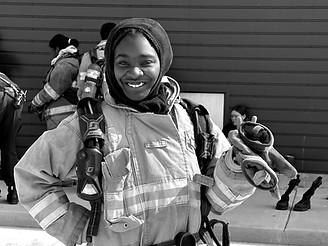

DCLI’s Public Safety Internships gives high school and middle school students an inside look at law enforcement, fire safety, and the broader legal system, exploring public safety as both a civic responsibility and a career path.
Each summer, DCLI hosts a four-week Public Safety paid internship during the month of June where students gain firsthand exposure to patrol and K-9 operations, police investigations, forensics, dispatch, corrections, EMS, fire protection and safety, legal processes, and even SWAT demonstrations. Participants not only spend time with local public safety professionals, but they also have the opportunity to learn from state agencies as well. This immersive experience allows participants to explore multiple career paths, build professional connections, and see public safety in action. The experience is four days each week for a half day. And student participants must be 15 years or older to participate. Lunch and transportation is provided each day.
DCLI COMMUNITY PUBLIC SAFETY ACADEMY
The mission of the Community Public Safety Academy (CPSA) is to educate and engage residents of Macon County by providing access to the resources, knowledge, and services that support public safety, community well-being, and resilience. Through structured, hands-on learning and guided dialogue, CPSA seeks to develop informed citizens who strengthen community partnerships and contribute to a safer, more connected civic environment.
CPSA is an eight-week immersive program for adult residents, featuring guided tours of the sheriff’s office, jail, dispatch center, and fire department. The program facilitates direct interaction with public safety professionals, working to remove barriers, clarify misconceptions, and enhance mutual understanding between agencies and the community.
Upon completion, graduates serve as ambassadors for public safety, helping to advance constructive relationships and greater public awareness by sharing the knowledge and perspectives gained through their participation in the Academy.
Nominations for Cohort 4 of the Community Public Safety Academy may be submitted by committee members or any individual wishing to self-nominate. Candidates must live and/or work within Macon County, be 21 years of age or older, have no prior felony or serious misdemeanor convictions (i.e., domestic battery, sex offenders, firearms, etc.), must consent to a criminal record check, agree to attend all sessions with no more than two (2) excused absences, and sign waiver of liabilities as needed. For a list of Cohort participants, click HERE.


PUblic Safety College Course
RACE, CLASS, & SOCIAL JUSTICE (CCJ 347)
University of Illinois Springfield
This Public Safety College Course explores the complex relationships between race, class, and the justice system in the United States, with a focus on how these dynamics shape public policy, law enforcement practices, and community outcomes. Students examine historical and contemporary issues of inequality, structural bias, and systemic barriers within criminal justice and public safety institutions.
Through critical readings, applied case studies, and guided discussions, participants develop a deeper understanding of how social identity and economic status influence access to justice and public resources. The course emphasizes practical reflection and civic responsibility, encouraging students to connect theory to real-world challenges in their communities.
Delivered in a hybrid format, the course combines in-person discussion sessions with online coursework and assignment submission, offering flexibility while maintaining meaningful engagement. Upon successful completion, students earn 3 transferable college credit hours through the Dawson Civic Leadership Institute.
Space is limited.